
This ‘Globalist Report’ post, an article by Andrew Puhanic, leaps into our consciousness for its amazing facts and its relevance to several issues that drive this blog. Main responses to this from my point of view are:
1. A mockery of true science. It has always been understood (especially with hindsight), that science theories are potentially vulnerable because of measurement ability and accuracy, reproducibility, environmental factors, sample sizes and/or bias, the ability (or lack of), to be remote and independent from the physical factors as well as the human factors of agenda and personal ego. Many things! Usually beyond our control!
Yet, on the whole, man has great understanding and has achieved high levels of accomplishment in establishing scientific theories and practical outcomes. True science has been the goal and has largely been the reward of honest ideals and endeavours.
Now we are to learn that these ideals are not always lived up to. True and honest scientists will be greatly dismayed to learn of this contamination of scientific methodology.
2. Fraud and Corruption: The degree to which the fraud exists is mind-blowing. In many other areas of human endeavour we have unfortunately come to expect degrees of human frailty to interfere with an honest endeavours. Need I mention them? Policing systems, politics, media, wherever big money exists – pharmaceuticals, agricultural companies, banking, illicit drugs of course but that overlaps into other supposedly innocent areas.
With the commonly claimed exception of #4 below, general science is not expected to be among these areas.
3. The US Connection: The claimed proportion of retracted papers attributed to the US in particular requires more data as the total papers submitted are not catalogued. However, it seems from internet disclosures of suspect and worse, scientific interpretations and applications in these scientific areas, that the US is leading the pack in self-destruction of its own morals, social and political structures and financial system. In effect destroying itself.
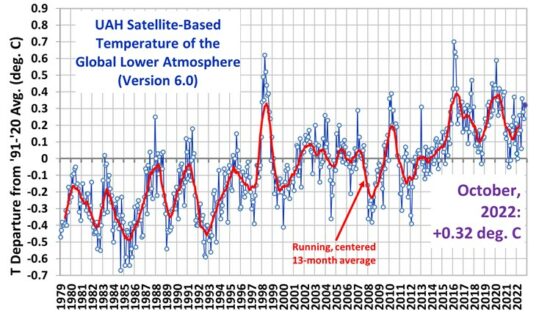
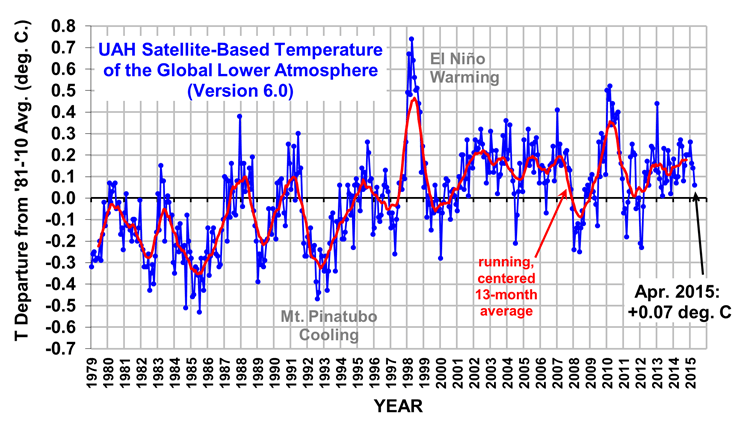
4. The Global Warming Example: The science displayed in the global warming debacle is a clear example of this fraud, and vice versa. This exposure makes a mockery of the “peer-reviewed” claim of authenticity.
AN astonishing two-thirds of all biomedical and life-science research publications and research articles that have been retracted from the public domain have been retracted because of fraud.
An article published in the Proceedings of the National Academy of Sciences of the United States of America reviewed more than 2000 scientific articles for reasons why they were retracted from public scrutiny and discovered that 67.4% of retractions were attributed to misconduct, of which includes fraud or suspected fraud (43.4%), duplicate publication (14.2%) and plagiarism (9.8%).
Also, the number of articles retracted from circulation has increased 10 times since 1975.
So what is biomedical and life-science research? According to Wikipedia, Biomedical research (or experimental medicine), is known as medical research, is the basic research, applied research, or translational research conducted to aid and support the body of knowledge in the field of medicine.
Most of the publications were published by authors from more than 55 countries. Of the 2,047 publications analysed, an unprecedented two-thirds of the publications retracted because of fraud or suspected fraud were from the United States, Germany, Japan and China.
The top three publications that had the most retracted entries were:
- Journal of Science
- Proceedings of the National Academy of Sciences
- The Journal of Biological Chemistry
However, the most alarming statistic from this publication is the fact that on average it took more than 32 months for the publications and research articles to be discovered and withdrawn.
Publications and research articles retracted because of fraud took an average 46 months to be discovered and withdrawn.
So what’s so alarming about having publications and research articles in circulation for so long before being discovered to be fraudulent? Well, the major problem is that decisions and policy development could be falsely derived from one of these publications, resulting in public policy based on false assumptions.
How many publications and research articles based on global warming and climate change have been and should be retracted because of fraud?
The authors of the article suggest that ‘the surge of retractions suggests a need to re-evaluate the incentives driving this phenomenon’ and presents solutions to resolve the phenomenon such as:
Increased use of check-lists.
- Improved training in logic, probability and statistics.
- Enhanced focus on ethics.
- The formation of a centralized database of scientific misconduct.
- The establishment of uniform guidelines for retractions and retraction notices.
At the end of the day, the authors of these fraudulent publications are human, and it should be expected from time to time that mistakes will happen.
However, all of these peer-reviewed publications can exert great influence on decisions and the attitudes of many people, therefore the public should in no way tolerate such an epidemic.


Read the source article here.




 The GOLDEN RULE
Reblogged this on Voiceless in America and commented:
It is called Researcher Bias–it’s alive and well–especially in America…you know…that place that keeps me Voiceless.