
Like ‘they’ say, you learn something new everyday. Wherever one looks, there are signs of human race self-destruction in action. Sometimes intentional, sometimes not. In this case, purely from ignorance and, of course, a bit of profiteering.
-
Join 848 other subscribers
Our FaceBook page
Awesome Topical Blogs
On this blog, a word or two.
Meta
Post Archives
Technical HINTS:
F11 toggles full screen view of web page window.
Ctrl F adds a word search tool to the toolbars.
Crtl + , - zooms in and out on your screen.
Ctrl/Shift/T re-opens last closed TAB.TIPS:
To believe the mainstream media is to risk ever knowing the truth about the real world. To believe government, (any government), issued information without considering their agenda(s), is to risk being brainwashed.WISDOM
"Our lives begin to end, the day we become silent about things that matter".--Dr. Martin Luther King Jr.
"I am only a child playing on the beach, while vast oceans of truth lie undiscovered before me". - Isaac Newton
“Imagination is more important than knowledge. For knowledge is limited to all we now know and understand, while imagination embraces the entire world, and all there ever will be to know and understand.” – Albert Einstein, who also said:
"The minority, the ruling class at present, has the schools and the press, usually the church as well. under its thumb. This enables it to organize and sway the emotions of the masses, and makes its tool of them!" And,
"Great spirits have always found violent opposition from mediocrities. The latter cannot understand it when a man does not thoughtlessly submit to hereditary prejudices but honestly and courageously uses his intelligence."The art of writing is the art of discovering what you believe.
— Gustave FlaubertGlobal Temperature
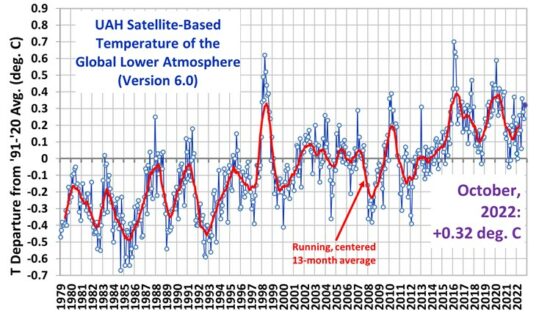
Dr Roy Spencer UAH current.
Blog Stats
- 178,206 hits
-
Recent Posts
- A New Topic – Geoengineering – Overwhelming Evidence!
- GMO Dangers – A Meaningful Revelation
- In Relation to the “New World Order”
- The Man Who Invented Climate Change – Maurice Strong
- Health! Dietary Information for All!
- A Call for More Action
- Health and Healing (Reblogged!)
- Australia’s Unrealized Gains Tax
- Truth, Tyranny, and the Covid Years: A Doctor’s Testimony to the Royal Commission
- Relativity and Quantum
Recent Comments
- Pam Vernon on A New Topic – Geoengineering – Overwhelming Evidence!
- Donna on Investigation Of WHO For Faking Coronavirus Pandemic
- Statins, Cancer & Cholesterol | The GOLDEN RULE on Statins, Cancer & Cholesterol – Legitimate doubts about mainstream medications
- Ken McMurtrie on Statins, Cancer & Cholesterol – Legitimate doubts about mainstream medications
- Ken McMurtrie on Economics and Banking – a Sensible Approach
- authorthat on Economics and Banking – a Sensible Approach
- Ken McMurtrie on WHO Is Responsible For The Global Covid Juggernaut?
- Ken McMurtrie on Boom: another vaccine whistleblower steps out of the shadows
- Ken McMurtrie on Boom: another vaccine whistleblower steps out of the shadows
- Everyday Circus on Boom: another vaccine whistleblower steps out of the shadows
Top Posts & Pages, by VIEWS
- The Spoils System Redux - Climate Version
- Health News from 'Natural News'
- WFC - World Financial Crisis, getting serious.
- AGW - NASA scientists clarifying the science.
- Fried foods not a heart health risk if you use the right oils
- Humanity at the Height of Folly - Fukushima woes
- Editors of World’s Most Prestigious Medical Journals: “Much of the Scientific Literature, Perhaps HALF, May Simply Be Untrue"...
- Syria Is Becoming Obama’s Iraq
- World Health Organization (WHO) - International Health Regulations (2005)
- The Sun - Cause or Preventer of Skin Cancer?
Top Posts & Pages, by LIKES
- Your Body and EMF sensitivities
- A Soros-Made “New World Order” Takes Shape at the UN
- An apple a day prevents arterial hardening to reduce heart disease risk
- Beans, Beans, the Magical Fruit..
- Smart meter waves reported to have devastating impact on all life
- FLASHBACK - New Bombshell of Disastrous Side Effects from Statins…
- Austerity USA Begins March 1st; The Bipartisan Poverty Program
- The Sun and Skin Cancer: Examining the Truths, Pseudo-Truths and Lies of Mainstream Science
- Market collapse in process? Billionaires continue to dump U.S. stocks, traders are betting against U.S. economy
- Six facts you need to know about eating oils and fats
Archives
- March 2026
- February 2026
- January 2026
- November 2025
- September 2025
- May 2025
- February 2025
- October 2024
- September 2024
- December 2023
- November 2023
- September 2023
- January 2023
- November 2022
- August 2022
- June 2022
- May 2022
- March 2022
- February 2022
- January 2022
- December 2021
- October 2021
- September 2021
- July 2021
- June 2021
- May 2021
- April 2021
- March 2021
- February 2021
- January 2021
- November 2020
- October 2020
- September 2020
- August 2020
- July 2020
- June 2020
- May 2020
- April 2020
- March 2020
- February 2020
- January 2020
- December 2019
- November 2019
- October 2019
- August 2019
- July 2019
- June 2019
- May 2019
- March 2019
- February 2019
- January 2019
- December 2018
- November 2018
- October 2018
- September 2018
- August 2018
- July 2018
- June 2018
- May 2018
- April 2018
- March 2018
- February 2018
- January 2018
- December 2017
- November 2017
- October 2017
- September 2017
- August 2017
- July 2017
- June 2017
- May 2017
- April 2017
- March 2017
- February 2017
- January 2017
- December 2016
- November 2016
- October 2016
- September 2016
- August 2016
- July 2016
- June 2016
- May 2016
- April 2016
- March 2016
- February 2016
- January 2016
- December 2015
- November 2015
- October 2015
- September 2015
- August 2015
- July 2015
- June 2015
- May 2015
- April 2015
- March 2015
- February 2015
- January 2015
- December 2014
- November 2014
- October 2014
- September 2014
- August 2014
- July 2014
- June 2014
- May 2014
- April 2014
- March 2014
- February 2014
- January 2014
- December 2013
- November 2013
- October 2013
- September 2013
- August 2013
- July 2013
- June 2013
- May 2013
- April 2013
- March 2013
- February 2013
- January 2013
- December 2012
- November 2012
- October 2012
- September 2012
- August 2012
- July 2012
- June 2012
- May 2012
- April 2012
- March 2012
- February 2012
- January 2012
- December 2011
- November 2011
- October 2011
- September 2011
- August 2011
- July 2011
- June 2011
- May 2011




 The GOLDEN RULE
I read that in Australian hormones are NOT used in chicken rearing. I also read that they are fed predominently soya which they (the chicken authority) believes to be NON GMO and sourced from Brazil. Can find nothing to indicate that arsenic is used in the rearing of Aussie Chooks – but heck ya never know coz they would not tell ya!
Thanks Clare, very helpful. It would be nice to be absolutely sure about the hormones and possibly antibiotics.
Why Arsenic is a Concern
Inorganic arsenic, the predominant form of arsenic in most of the 65 rice products Consumer Reports analyzed, is ranked by the International Agency for Research on Cancer (IARC) as a known human carcinogen. It is known to cause bladder, lung, and skin cancer in humans, with the liver, kidney, and prostate now considered potential targets of arsenic-induced cancers. Two remaining forms of organic arsenic found−DMA and MMA−are considered to be possible carcinogens. It is important to note that these forms can chemically interchange, especially in the environment, so the continued use of organic arsenicals in animal feed and pesticides is still a major concern.
Arsenic can enter soil or water due to weathering of arsenic-containing minerals in the earth, but the U.S. is the world’s leading user of arsenic, and since 1910 about 1.6 million tons have been used for agricultural and industrial purposes, about half of it only since the mid-1960s.
Long-term studies that track health effects of exposure to arsenic in rice have only recently begun. One small study, published in late 2011 by Dartmouth researchers, suggests that many people in the U.S. may be exposed to potentially harmful levels of arsenic through rice consumption.
The USDA has invested in research to breed types of rice that can grow in areas that have elevated levels of arsenic in their soil. That may help explain the relatively high levels of arsenic found in rice from the south-central U.S., though other factors such as climate or geology may also play a role. http://www.businessreviewaustralia.com/press_releases/consumer-reports-investigation-varying-levels-of-arsenic-found-in-rice-and-rice-products-show-need-f
AM looking into arsenic levels in Australian Rice and rice from other o/s sources, will let you know.
Many thanks for this comment, and for more researching.
It is likely, hopefully that this is not a problem in Australia. Yet we do import rice, for some reason.
The eastern rice paddies are hardly monitored for health hazards.